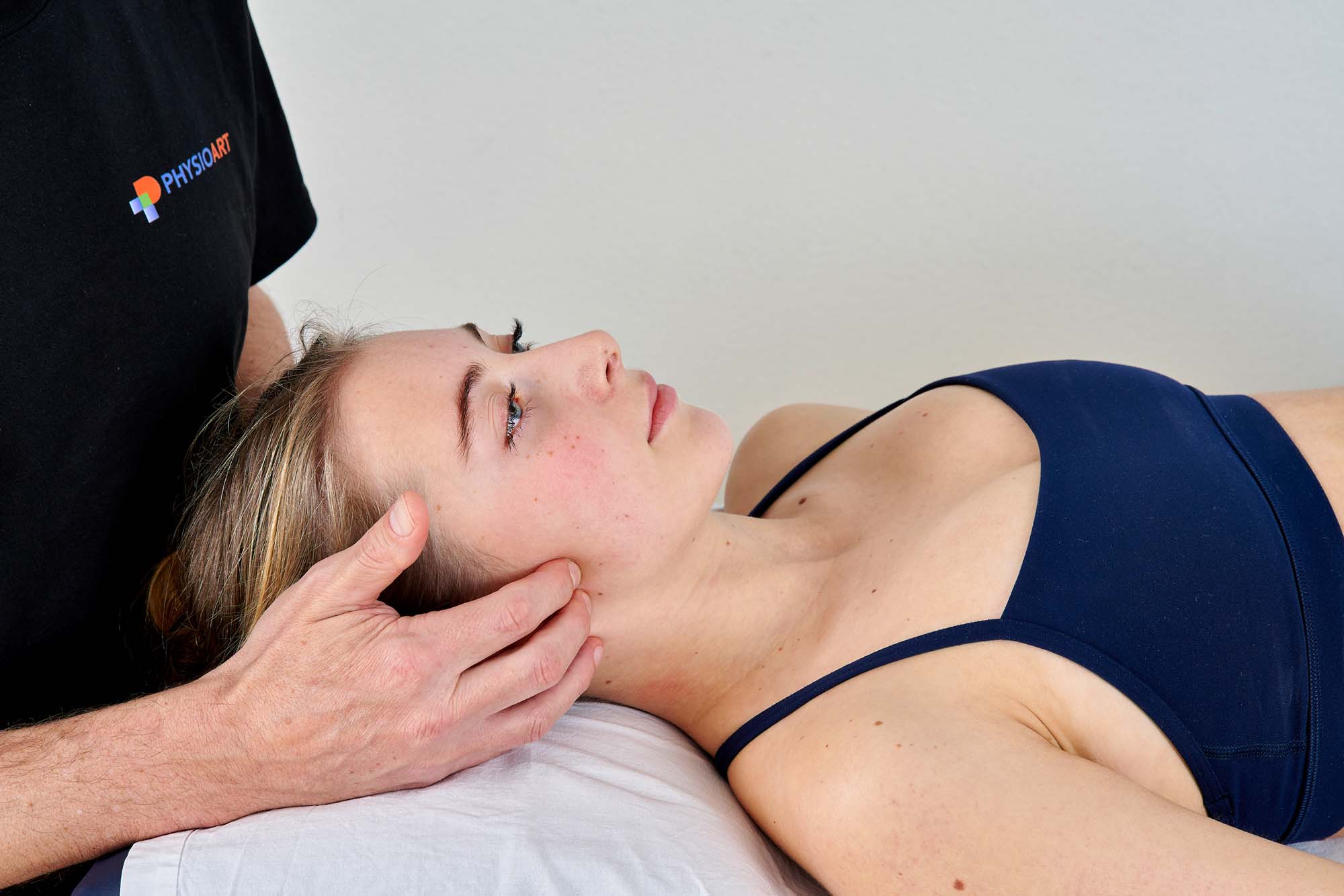


Trigger points: The underestimated cause behind many chronic pains
A deep, persistent pain in the neck or back that just won't go away? Many sufferers try heat therapy, stretching exercises, or painkillers without seeing any lasting improvement. A common reason for this is often overlooked in practice: so-called trigger points in the muscles.
Trigger points, medically also referred to as myofascial trigger points, are among the most common but least recognized causes of chronic muscle and joint pain. Those who understand the connections can treat them more specifically, instead of merely combating the symptoms.
What are Trigger points?
A trigger point is a hyperirritable point within a tense muscle bundle, often palpable as a small, pressure-sensitive node. When pressure is applied to this point, the muscle often responds with local pain that can also radiate to other body regions, the so-called referred pain.
Typical triggers for the formation of trigger points are:
- One-sided behavior in everyday life, such as long sitting at the computer at work
- Repeated patterns of movement during sports or manual labor
- Psychological stress manifested in increased baseline muscle tension
- Acute overload or unusual peaks in load
- Lack of movement and a permanently shortened musculature
Why trigger points cause such persistent pain
A trigger point occurs when individual muscle fibers permanently contract and no longer completely relax. This local sustained tension impairs blood circulation in the affected area, causing metabolic products to accumulate and further irritating the surrounding nerve receptors. A single point can thus cause more discomfort than its small size would suggest.
Affected people often report:
- Deeply seated, oppressive pressure pain that increases with exertion
- Pain radiating to adjacent body regions, for example from the neck to the head or from the shoulder to the arm
- Physical limitations due to shortened muscles
- Recurrent tension despite stretching and massage
- Loss of strength or rapid fatigue in the affected muscle
Where trigger points are particularly common
Basically, a trigger point can form in any skeletal muscle. In practice, certain patterns are particularly common:
- Neck and upper trapezius muscles, often responsible for headaches and neck pain
- Shoulder area, often the cause of movement restrictions and radiating arm pain
- Back, especially in the area of the spinal column and the lumbar spine
- Jaw and facial muscles, partly related to CMD symptoms
- Leg and foot muscles, often in runners and endurance athletes:
Why the cause is often overlooked
Since trigger points often cause pain in a different location than where they actually lie, the actual trigger is often not identified during treatment. For example, headaches are often treated in isolation, even though the cause lies in a strained neck muscle. Only a targeted examination of the muscles provides clarity in this case.
How trigger points are detected
In a physical examination, trigger points can usually be easily identified:
- Palpation of the muscles: Examination for hardened muscle fibers and pressure-sensitive points
- Triggering the transmitted pain pattern: Testing whether pressure at the point reproduces the known complaints
- Motion analysis: Assessment of mobility and muscle shortening
- History of training and load: Classification of which everyday or sports-related stresses trigger or exacerbate the complaints
This examination often shows that the complaints cannot be considered in isolation; they are part of a larger muscular pattern.
What really helps with trigger points
Since the cause lies in the muscle itself, effective treatment begins right there. What has proven effective:
- Manual trigger point therapy with targeted pressure to resolve the tension
- Dry Needling, in which a fine needle is inserted directly into the trigger point to relieve muscle tension. More about this on our page on trigger points. Dry needling in Basel.
- Stretching and mobilization exercises for the long-term relief of the affected muscles
- Posture correction to reduce the actual cause of the misalignment
- Targeted strengthening of the opponent's muscles to avoid a recurrence of overload
These measures address the underlying cause and can therefore not only sustainably reduce the acute symptoms but also recurring muscle tensions.
When an examination is advisable
An examination is particularly worthwhile if tension or pain regularly returns despite stretching, heat, or massage. Also, radiating symptoms whose cause remains unclear are an important indication of possible trigger points.
The most important findings in summary
- Trigger points are hyper-irritable points in the muscles that can cause local and diffuse pain.
- Pain often does not manifest itself where the actual cause lies, which makes diagnosis more difficult.
- The neck, shoulders and back are among the most commonly affected regions.
- Targeted treatment of the underlying cause usually has a more lasting effect than simply combating the symptoms.
Frequently asked questions about trigger points
Muscle soreness results from minor micro-injuries caused by unusual strain and usually resolves on its own within a few days. A trigger point, on the other hand, is a persistent, localized hardening of the muscle that can persist for weeks or months without targeted treatment.
Trigger points themselves are not dangerous, but they can significantly impair quality of life through persistent pain and movement restrictions. Moreover, if left untreated, they can lead to compensatory movements that, in turn, favor new tensions in other areas.
Both methods target the same underlying cause, but they work differently. Dry needling often reaches the trigger point more directly and can be more effective in deeper muscles, whereas manual therapy is gentler and particularly suitable for sensitive areas. Which method is appropriate depends on the individual situation.
Mild strains can often be relieved on their own with heat, stretching, or a fascia roller. However, for deeper-lying or recurring trigger points, professional treatment is significantly more effective, as the affected muscle must be treated specifically and with the right pressure.
This depends on the duration and intensity of the symptoms. Acute, recently-developed trigger points can be significantly relieved in some cases after just a few sessions, whereas chronic muscle tension requires a longer, often accompanying treatment.
Physiotherapists specializing in myofascial trigger point therapy assess the muscles, posture, and movement patterns and choose the appropriate treatment method individually.
At PhysioART Basel, we specifically examine your muscles for trigger points and create an individually tailored treatment, whether with manual trigger point therapy or dry needling. More about our approach can be found on our page about trigger point therapy. Trigger point therapy in Basel.
Do you want to have your neck and posture problems examined?
At PhysioART Basel, we specifically examine your muscles for trigger points and create an individually tailored treatment, whether through manual trigger point therapy or dry needling.
Book an appointment now