

CMD and headaches – The underestimated connection
Recurrent headaches are among the most common complaints of all, and yet in many cases the actual cause remains undetected. Numerous sufferers try various painkillers, relaxation techniques, or different specialists without seeing any lasting improvement. One reason for this is regularly overlooked in practice: the temporomandibular joint.
Craniomandibular dysfunction (CMD), that is, a functional disorder in the interaction between the jaw, facial muscles, and skull, is closely linked to headaches. However, the connection is rarely established because the pain is usually perceived in the head and not in the jaw.
Why the jaw joint Can cause headaches
The jaw joint is closely connected to the temporomandibular joint, the cervical spine, and the surrounding nerve structures. If the joint is overloaded, for example due to teeth grinding, a misaligned bite, or chronic tension, this tension often transfers to adjacent structures.
A visual illustration of this is a chain: if you pull on one link, you can feel the tension in the adjacent links as well. Similarly, overloads in the jaw affect muscles in the area of the skull, neck, and scalp, where tension headaches can occur.
Typically, those affected report:
- Pressure or pulling sensation in the nape of the neck
- Headaches that are particularly severe in the morning after waking up
- Migraine-like symptoms without a recognizable trigger
- Additional tension in the neck and shoulders
- Toothache or pain when chewing as a concomitant symptom
Why the diagnosis often takes longer to be made
Headaches are usually explained as neurological or due to tension in the neck. The jaw joint rarely comes into focus, although it is one of the most common but least-noticed causes of chronic headaches.
In addition, many CMD symptoms occur non-specifically. Not every affected person has audible jaw clenching or a restricted mouth opening. Sometimes the dysfunction manifests itself exclusively through headaches and neck pain, which makes further classification even more difficult.
How a CMD-related headache cause is recognized
In the physical examination, typical signs of a CMD can often be easily identified:
- Movement analysis of the jaw: Restrictions or deviations in opening and closing the mouth.
- Examination of the calf musculature: Hardening or painful trigger points in the area of the temples and cheeks.
- Assessment of the keeping conditions: Relationships between head, neck and shoulder posture and jaw position.
- Pain course and patternsTime, frequency, and triggers of headaches compared with jaw strain, such as after stress or nighttime teeth grinding.
This examination often shows that the headaches cannot be considered in isolation; they are part of a larger muscular pattern.
What really helps with CMD-related headaches
Since the cause is muscular and joint-related, effective treatment begins right there, rather than simply combating the headache symptoms. What has proven effective:
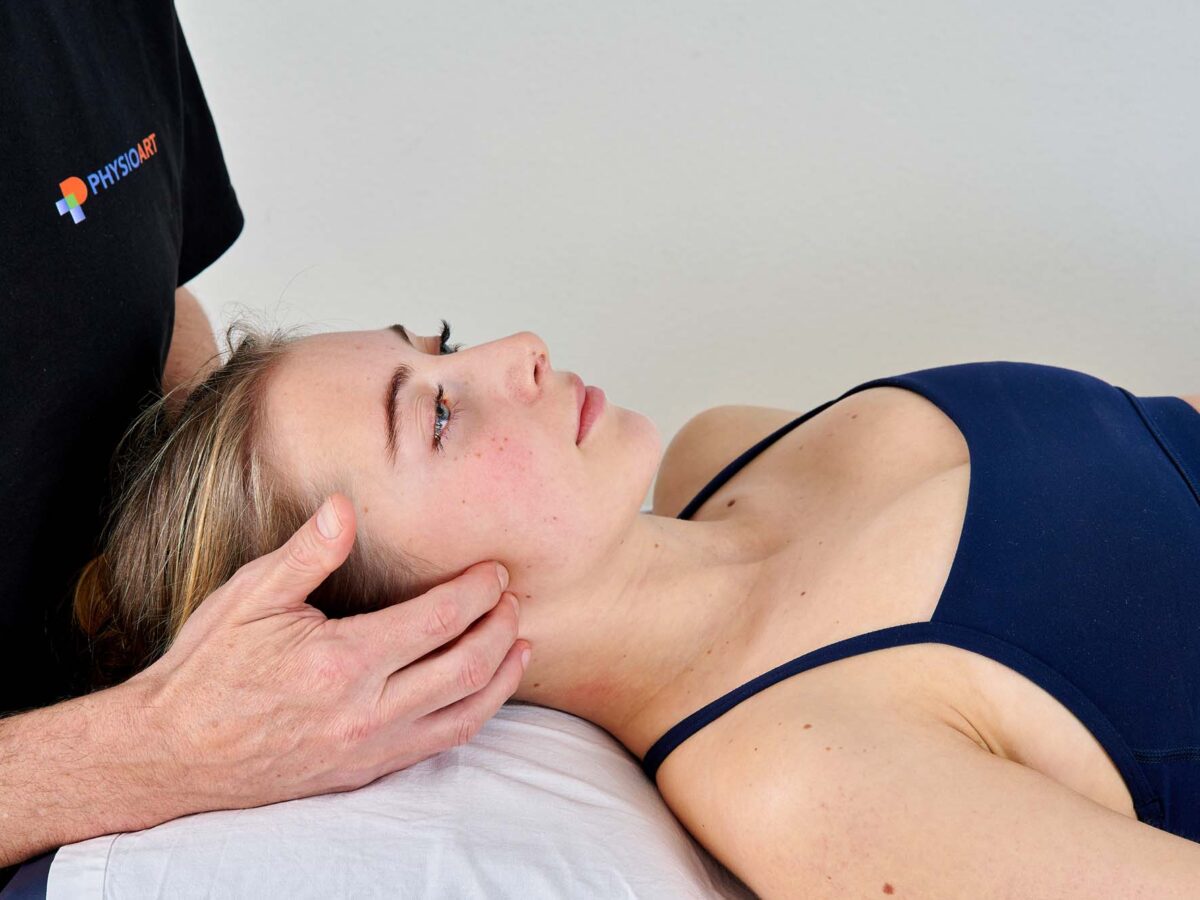
- Manual techniques for the treatment of tension in the jaw and neck muscles
- Gentle mobilization of the jaw joint to improve mobility
- Posture correction to reduce compensatory load imbalances
- Targeted exercises for everyday life to relieve muscle strain in the long term
- If necessary, collaborate with a dental practice, for example for an orthodontic brace
These measures address the underlying cause and can therefore significantly reduce not only the jaw pain but also the accompanying headaches.
When an examination is advisable
An examination of jaw function is particularly worthwhile if headaches occur regularly and previous treatment attempts have not brought about a lasting improvement. Additionally, accompanying signs such as jaw grinding, morning tension in the face, or pain when chewing are important indications that warrant a targeted examination.
The most important findings in summary:
- Headaches can have their cause in the jaw joint, even without obvious jaw symptoms.
- The close muscular connection between the jaw, neck, and head explains why a CMD manifests itself in the head.
- Targeted examination of the jaw function can provide crucial clues in the case of unclear, chronic headaches.
- Treatment aimed at the root cause, in the jaw and neck area, often has a more lasting effect than simply combating the symptoms.
Frequently asked questions about CMD and headaches
Yes. Due to the close muscular connection between the jaw joint, temporomandibular muscles, and the head, improper strain on the jaw can trigger tension headaches or migraine-like discomforts in the temples area.
CMD-related headaches often occur unilaterally or in the region of the temples, often intensify in the morning or after jaw strain such as chewing or speaking, and are often accompanied by jaw pain or tension in the neck.
No. A CMD can only express itself through headaches and neck pain, without audible cracking or restricted mouth opening. This often makes the association even more difficult.
Physiotherapists specializing in jaw-joint therapy assess jaw mobility, muscle strength, and posture. If necessary, treatment is provided in collaboration with a dental practice, for example for a jaw-lift device.
Painkillers provide short-term relief of the symptoms, but do not address the underlying muscular cause in the jaw. If headaches recur regularly, it is worth investigating jaw function instead of relying solely on continuous medication.
Be on the lookout for patterns such as nighttime teeth grinding, tension upon waking, or an increase in symptoms after stressful days. These observations are valuable clues for the examination and help to specifically narrow down the cause.
Do you want to have your jaw function examined in connection with head, neck, and posture complaints?
At PhysioART Basel, we examine jaw function in connection with headaches, neck pain, and posture problems and create an individually tailored treatment plan. More about our approach and treatment options can be found on our page for CMD therapy in Basel.
Book an appointment now